Latest

The Braces Brigade
It’s not that I’m injured. I’m just well supported!
Medicine. Innovation. Healthy Living. Generosity.
The science of healthy aging is advancing rapidly. Here's what we know, what we're learning, and what you can do today.
The research is clear: how you age is influenced far more by your daily habits than by your genes. Exercise, nutrition, sleep, social connection, and mental engagement all have measurable effects on how long you stay healthy, mobile, and independent.
Pickleball, it turns out, is one of the better things you can do for healthy aging. It combines aerobic exercise, balance training, social interaction, and strategic thinking — all in one activity. That's not an accident. It's why so many physicians play it.
The Funny Side of pickleball players we see daily
I’ve spent much of my life studying and treating medical problems. One thing I’ve learned is that a sense of humor can make the journey a lot more enjoyable. Growing older may be inevitable, but growing up is apparently optional!
Every cartoon and joke here is original to Doctor Pickleball. New entries appear at the top of the gallery, and earlier favorites move into the archive below.
It’s not that I’m injured. I’m just well supported!

“That was IN! I saw the line move!” — “Yes, about two inches out.”
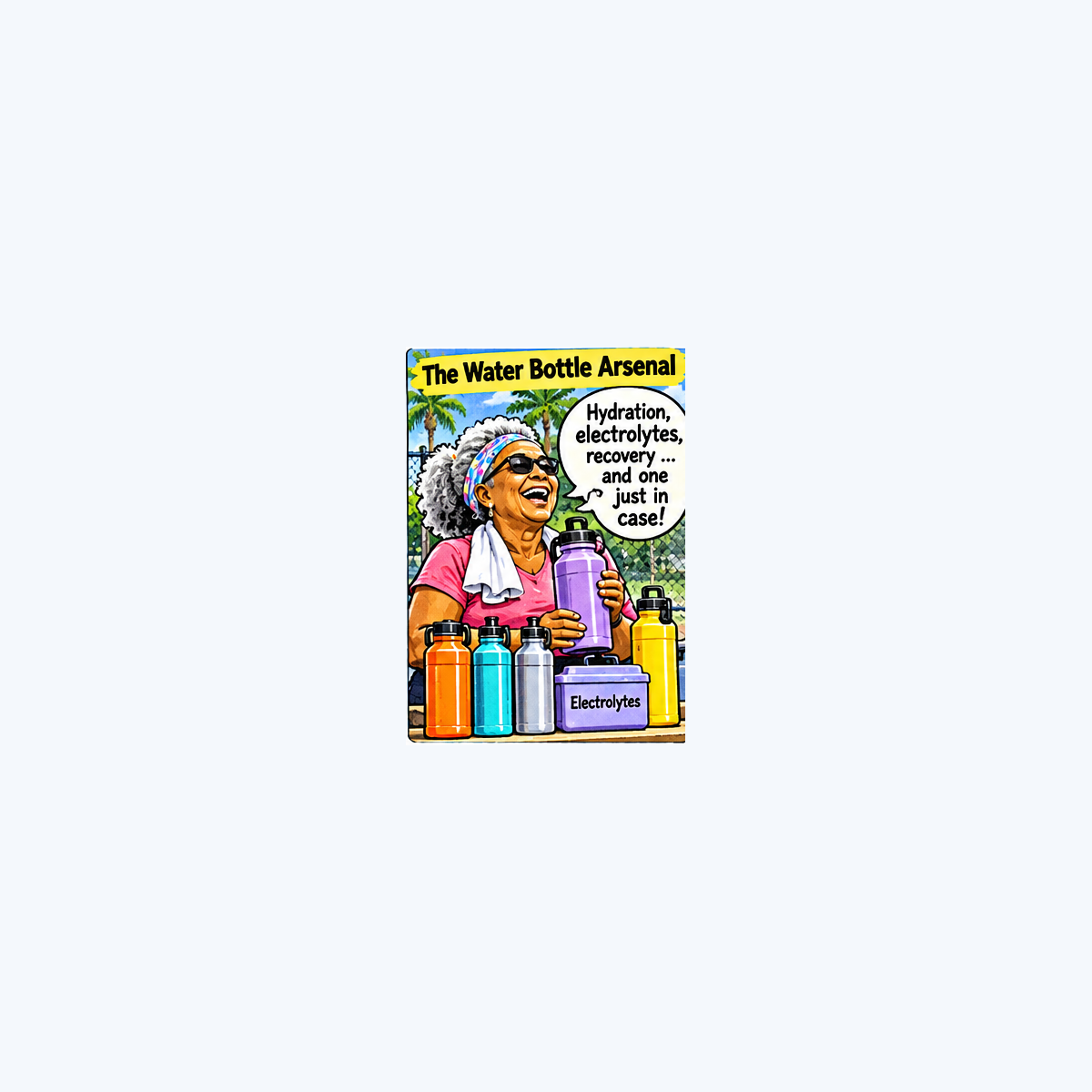
Hydration, electrolytes, recovery, and one just in case!

I’m still searching for that perfect paddle. Only seven more to go!
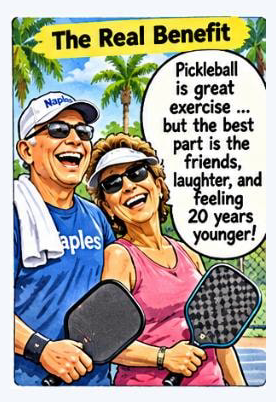
Pickleball is great exercise, but the best part is the friends, laughter, and feeling 20 years younger!
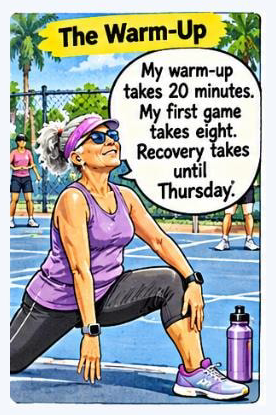
My warm-up takes 20 minutes. My first game takes eight. Recovery takes until Thursday.

We started out talking about our paddles. Somehow we ended up comparing MRIs.
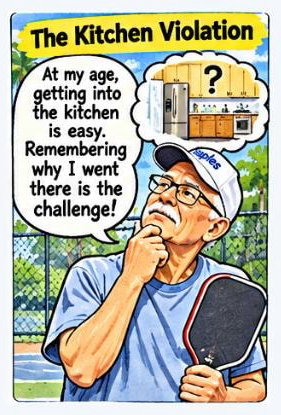
At my age, getting into the kitchen is easy. Remembering why I went there is the challenge.
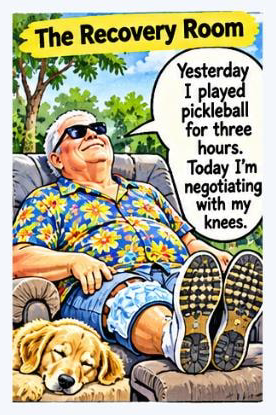
Yesterday I played pickleball for three hours. Today I’m negotiating with my knees.

“You never listen to me!” — “I thought you called that ball out.”

My knees have started making a sound like a bowl of Rice Krispies when I bend down to pick up a serve. Snap, crackle, pop — and that’s just standing back up. I’ve told my knees for years that they’re not getting any younger. They’ve finally agreed with me.
My Two Cents: The medical term is crepitus. The practical term is “allow a little more warm-up time.”

They say memory is the second thing to go. I can’t remember the first.

In my younger days, I could stay out on the court all afternoon. Now I’m in the zone the moment I find a comfortable chair after the game. Progress comes in many forms.
My Two Cents: Rest days are part of training. I tell myself that daily — usually from that comfortable chair.
Regular physical activity reduces the risk of heart disease, type 2 diabetes, certain cancers, cognitive decline, and fall-related injuries. Strength training in particular becomes more important with age — maintaining muscle mass preserves metabolism, balance, and independence. The evidence for exercise as medicine is overwhelming and consistent.
Adults lose 3–8% of muscle mass per decade after age 30, with the rate accelerating after 60. This process — sarcopenia — is not inevitable. Resistance training two to three times per week can maintain and even rebuild muscle at any age. It also improves bone density, reduces fall risk, and supports joint health.
Falls are the leading cause of injury-related death in adults over 65. Balance deteriorates with age but responds well to training. Activities that challenge balance — including pickleball — help maintain the neuromuscular coordination that prevents falls. Single-leg exercises, tai chi, and yoga are also well-supported by research.
Chronic low-grade inflammation is associated with many age-related diseases. Diets rich in vegetables, fruits, whole grains, and healthy fats — and low in processed foods and added sugars — are consistently associated with better health outcomes. Protein intake becomes more important with age to support muscle maintenance.
Sleep is when the body repairs tissue, consolidates memory, and clears metabolic waste from the brain. Chronic sleep deprivation is associated with increased risk of cardiovascular disease, cognitive decline, and impaired immune function. Seven to nine hours remains the evidence-based recommendation for most adults.
Loneliness is associated with health outcomes comparable to smoking 15 cigarettes a day. Social engagement, a sense of purpose, and meaningful relationships are consistently associated with longer, healthier lives in longitudinal studies. Pickleball communities, volunteer work, and family involvement all contribute.
Science is actively investigating the biology of aging. Here are areas of genuine progress — presented honestly, without overpromising.
Senescent cells — cells that have stopped dividing but haven't died — accumulate with age and contribute to inflammation and tissue dysfunction. Research into compounds that selectively clear these cells (senolytics) is active and promising, though most work remains in animal models or early human trials.
Telomeres are protective caps on chromosomes that shorten with each cell division. Shorter telomeres are associated with aging and disease. Research into telomere biology is active, but interventions that safely extend telomeres in humans remain elusive and carry potential risks.
The trillions of microorganisms in the gut influence immune function, inflammation, metabolism, and even mood. The microbiome changes with age, and research into how diet and probiotics affect these changes is growing rapidly. Practical recommendations are still evolving.
The information on this page is for general educational purposes and does not constitute medical advice. Consult your physician before beginning any new exercise program or making significant changes to your diet or lifestyle.