
Sarcopenia: The Italian Island That Stole My Muscles
Muscle loss sneaks up on us — but resistance training, protein, and a well-placed dink can slow the retreat
By Mark C. Engasser, MD — Board-Certified Orthopedic Surgeon
When I first heard the word sarcopenia, I thought it might be a charming island off the coast of Italy.
You know the kind: blue water, a little café overlooking the harbor, and an elderly gentleman named Giuseppe who has been lifting fishing nets for 75 years and can still open a pickle jar on the first try.
Unfortunately, sarcopenia is not a vacation destination. It is the gradual loss of muscle strength and muscle mass that can occur as we age.
And unlike a Mediterranean cruise, it tends to sneak up on you without sending an itinerary.
The Great Muscle Disappearance
For many of us, the first sign isn't looking in the mirror and announcing, "My quadriceps appear to have lost 12 percent of their volume."
It's more likely something like this:
- The grocery bags seem heavier.
- Getting out of a low chair requires a little rocking and a well-timed grunt.
- Climbing the stairs feels like you've added a floor to the house.
- You need both hands to lift the suitcase you used to toss into the overhead bin.
We may joke that gravity gets stronger as we get older. But part of what we're noticing may be that our muscles are getting weaker.
Muscle strength matters for much more than appearance. It helps us walk, balance, climb stairs, recover from illness, and remain independent. It also helps us keep doing the things we love—whether that means playing pickleball, working in the garden, getting out on the boat, or keeping up with grandchildren who apparently never need to recharge.
Are We at War with Sarcopenia?
I would say yes. But before you put on camouflage and storm the gym, let's be clear: the goal isn't to look like you're preparing for a bodybuilding competition.
The goal is to give your muscles a reason to stick around.
Muscles respond to being challenged, including later in life. The most effective way to do that is resistance training: using weights, exercise machines, resistance bands, or your own body weight to make the muscles work harder than usual.
That might include:
- Standing up from a sturdy chair and sitting back down with control.
- Stepping onto a low platform.
- Pulling an exercise band toward your body.
- Rising onto your toes while holding a counter for balance.
- Using weights or machines suited to your abilities.
Start at a level you can manage safely and gradually increase the challenge. If you have joint replacements, significant pain, balance problems, or other medical concerns, a physical therapist or qualified trainer can help tailor a program.
And remember: lifting the television remote repeatedly with one hand is excellent practice for selecting a show, but it may not be enough for the rest of your body.
Doesn't Pickleball Count?
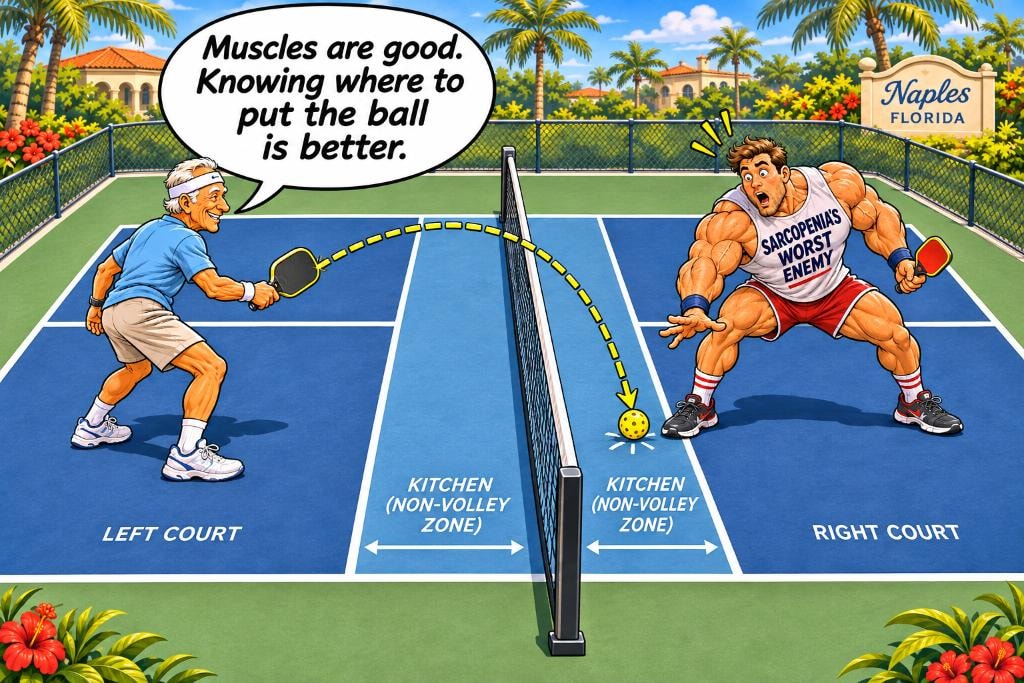
Absolutely. Pickleball gets you moving and challenges your coordination, balance, and reactions. It also provides something that no exercise machine can: a partner who will happily explain what you did wrong on the last point.
But even if you play regularly, dedicated strength training can be a valuable addition. Pickleball asks your muscles to perform; strength training helps prepare them for the job.
Think of it this way: you wouldn't expect your paddle to perform its best forever if you never took care of it. Your legs deserve at least as much attention as your paddle.
Feed the Troops
Muscles also need adequate food and protein. That doesn't mean everyone needs to start drinking giant protein shakes or carrying a rotisserie chicken to the gym.
It does mean paying attention to your overall nutrition, particularly if you're losing weight or eating less than you used to.
Protein needs vary. If you have kidney disease or another medical condition, talk with your physician or a dietitian before substantially increasing your protein intake. The right plan should support both your muscles and your overall health.
When Should You Pay Attention?
Talk with your clinician if you've noticed a meaningful decline in strength, trouble rising from a chair, slower walking, more difficulty with stairs, falls, or unintended weight loss. There can be several reasons for these changes, and an evaluation can help identify what's going on.
You don't have to wait until everyday activities become difficult to start building strength. Small, consistent efforts can make a difference.
Dr. Engasser's Perspective
We spend a lot of time thinking about how long we want to live. We should also think about how we want to live during those years.
I want to keep moving, traveling, playing pickleball, and enjoying time with family. I suspect you have your own list—and it probably doesn't include struggling to get out of a chair.
So perhaps it's time to declare war on sarcopenia. Not with tanks or battleships, but with a couple of weights, a resistance band, and a determination to keep moving.
And if someone invites you to Sarcopenia for a Mediterranean vacation, I'd suggest checking the map before you book.
This article is for general education and is not a substitute for individual medical advice.